
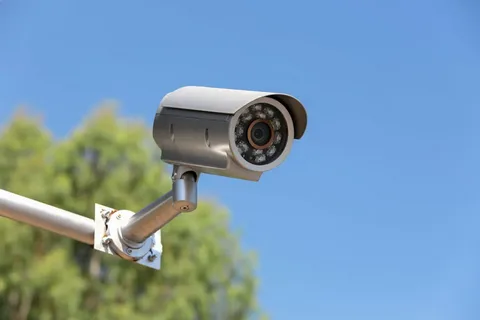
A doorbell camera from a big-box store takes ten minutes to set up. It also tends to miss the one thing it was bought to catch: a clear face, a readable licence plate, or the side gate where most intruders actually enter. Across the Greater Toronto Area, more homeowners and business owners are discovering that a camera and a security camera system are two very different things.
This guide explains what a properly designed system looks like, how the technology works, and which questions property owners in the GTA, Durham Region and the Ottawa Valley should ask before anyone drills a single hole.
Why Plug-and-Play Cameras Fall Short
Consumer Wi-Fi cameras are built for convenience, not coverage. They run on batteries or a nearby outlet, depend on a home router that may sit three walls away, and usually store footage on a paid cloud plan.
That creates predictable weak points:
- Dropped connections: Brick, stucco and metal siding weaken Wi-Fi, so outdoor cameras lag or go offline.
- Dead batteries: Cold Ontario winters drain lithium batteries fast, often when footage matters most.
- Poor placement: Cameras get mounted where an outlet happens to be, not where the risk is.
- Low detail at distance: A wide-angle lens may show a figure at the end of a driveway but not a face.
A professionally designed security camera system solves these problems by starting with the property, not the product.
How a Modern Security Camera System Works
Most professional installations today follow a simple structure. Each camera connects by a single network cable to a central recorder. That one cable carries both power and data, a standard known as Power over Ethernet (PoE).
The recorder, usually a network video recorder (NVR), stores footage locally on hard drives. It also connects to the internet so owners can watch live and recorded video from a phone.
This design has clear advantages:
- Stable signal: Wired cameras do not compete for Wi-Fi bandwidth.
- Reliable power: No batteries to swap, and the recorder can sit on a backup power supply.
- Local storage: Footage stays on the property, with no mandatory monthly fees.
- Scalability: New cameras can be added as a home grows or a business expands.
ENV Electric installs systems with high-definition video, wide-angle coverage, motion detection and weather-resistant housings built for outdoor use.
Choosing the Right Cameras for Each Zone
No single camera suits every location. A good installer matches the camera to the job each zone needs to do.
| Camera type | Best use | Key strength |
| Bullet | Driveways, long walls, parking lots | Long-range view, visible deterrent |
| Dome | Entrances, porches, retail floors | Tamper-resistant, discreet angle |
| Turret | Front doors, garages | Strong night vision, less glare |
| PTZ (pan-tilt-zoom) | Large lots, warehouses | One camera covers a wide area |
Resolution matters too. A 4MP or 4K camera can identify a face at a distance where a 1080p camera only shows a shape. Infrared night vision and colour low-light sensors keep footage useful after dark, which is when most break-ins occur.
Placement: Where Professional Installers Point Cameras
The hardware is only half the system. Placement decides whether footage is useful in court or useless on a phone screen.
For residential properties, installers typically cover:
- Every exterior door, including the back and side doors
- The driveway and the street-facing approach
- Side gates and walkways between houses
- The garage, both the overhead door and any man door
- The backyard, especially near patio doors and sheds
For commercial properties, coverage extends to loading docks, cash areas, stock rooms, parking lots and perimeter fencing. Larger buildings often need multi-camera networks with remote monitoring across several locations.
Cameras are best mounted between 8 and 10 feet high. That height is out of easy reach but low enough to capture faces rather than the tops of hats.
Smart Features Worth Paying For
Modern systems do far more than record. Features that add real value include:
- Motion zones that ignore passing cars and only alert on the driveway
- Person and vehicle detection that cuts false alarms from trees and animals
- Mobile notifications with a short clip sent straight to a phone
- Cloud backup of key clips, so footage survives even if a recorder is stolen
- Two-way audio on doorbell and entry cameras
These tools help property owners stay connected to their surveillance remotely, whether they are at work, on vacation, or at a cottage in the Ottawa Valley.
Why a Licensed Electrician Matters
Security cameras sit at the meeting point of electrical work and network technology. Many installations need a new circuit, an outdoor receptacle or a dedicated supply for the recorder. In Ontario, electrical work done for hire must be performed by a contractor licensed through the Electrical Safety Authority.
ENV Electric holds ECRA/ESA licence #7014546 and brings more than 40 years of experience across residential, commercial, industrial and agricultural work. That background matters when a camera project grows into a panel upgrade, backup power for the recorder, or new exterior lighting that improves night footage.
A licensed team also hides cable runs inside walls and soffits, seals every exterior penetration against moisture, and labels the system so it can be serviced later.
Network Security: The Part Most Owners Forget
An internet-connected camera is also a computer on the home network. Poorly secured cameras have been hijacked in large botnet attacks worldwide. A professional setup should include:
- Changing every default password before the system goes live
- Keeping firmware updated on cameras and the recorder
- Placing cameras on a separate network segment where possible
- Using the manufacturer’s encrypted app for remote viewing
These steps protect both the footage and the rest of the household’s devices.
Questions to Ask Before Hiring an Installer
Before signing a quote, GTA property owners should get clear answers to these questions:
- Is the company licensed for electrical work in Ontario?
- Will the system be wired PoE or wireless?
- How many days of footage will the recorder hold?
- Can the system add cameras later without replacing the recorder?
- Who handles setup of the mobile app and passwords?
- What warranty covers the cameras and the installation?
How Long Does Installation Take?
Most residential security camera system installations are completed within a single day. Larger commercial systems with many cameras, long cable runs or multiple buildings may need additional setup time.
Final Word
A camera that misses the face, drops the signal or dies in January offers little more than peace of mind on paper. A properly designed, professionally wired system delivers clear evidence, dependable alerts and protection that lasts for years.