
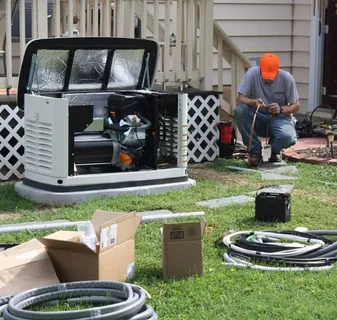
Backup generator installation is the professional process of fitting a home with a standby power system that detects an outage and restores electricity automatically, without the homeowner lifting a finger. For Ajax homeowners, where winter storms, summer grid strain, and aging infrastructure all threaten supply, a permanently installed standby generator is the difference between a brief flicker and days without heat, refrigeration, sump pumps, or medical equipment. Because the work involves both high voltage electrical connections and, in most cases, a fuel supply, it is regulated, permit-bound, and firmly the province of a licensed electrician.
ENV Electric is an ECRA/ESA licensed contractor with more than four decades of experience serving Ajax and the wider Durham Region. This guide explains how a backup generator works, how the right size is determined, what a compliant installation involves, and why this is not a do-it-yourself project.
Standby Generators Versus Portable Generators
The first decision is the type of system, and the two options differ in nearly every respect. A portable generator is a small, fuel-tank unit wheeled out after the power fails, started manually, and connected to a few appliances by extension cords. It is inexpensive but limited, requires the homeowner to be present and awake when the outage hits, and — critically — produces carbon monoxide that has caused deaths when units are run too close to a home.
A standby generator, by contrast, is permanently installed outside the house on a concrete or composite pad, wired into the home’s electrical system, and connected to a continuous fuel source such as natural gas or propane. When it senses a loss of utility power, it starts on its own within seconds and shuts down when grid power returns. For whole-home reliability in Ajax winters, the standby system is the option that actually delivers uninterrupted protection, and it is the focus of ENV Electric’s generator installation service.
The Automatic Transfer Switch: The Heart of the System
The component that makes automatic backup possible is the automatic transfer switch, or ATS. This device continuously monitors the utility supply, and the instant it detects an outage it safely disconnects the home from the grid and connects it to the generator. When utility power is restored, it reverses the process and shuts the generator down.
That isolation function is not merely convenient — it is a safety requirement. A generator wired into a home without a proper transfer switch can “backfeed” electricity onto the utility lines, endangering the line workers attempting to restore power. This is one of the central reasons backup generator installation must be performed by a licensed electrician and inspected, never improvised. The transfer switch sits at the core of the broader backup power systems ENV Electric designs for homes across the region.
Sizing the Generator: Why a Load Calculation Matters
A generator that is too small will overload and shut down; one that is needlessly large wastes money and fuel. Correct sizing comes from a load calculation — an assessment of which circuits the homeowner wants to keep running and the total electrical demand those circuits represent, measured in kilowatts.
The calculation accounts for the steady draw of essentials such as the furnace, refrigerator, sump pump, and lighting, and for the surge of power that motors demand at startup, which can briefly exceed their running load several times over. A homeowner who wants only critical circuits backed up needs a smaller unit than one who wants the entire house, including air conditioning, to run normally. This assessment is part of why the work connects directly to a home’s existing residential electrical system, since the generator, panel, and circuits must be evaluated together as one integrated system.
Permits, Inspection, and Code Compliance in Ontario
Backup generator installation in Ajax is governed by safety regulation, and compliance is not optional. Electrical work requires a permit and inspection through the Electrical Safety Authority, the body that enforces the Ontario Electrical Safety Code, and the connection to a natural gas or propane supply must be made by a qualified technician under the relevant gas code.
Working with an ECRA/ESA licensed contractor protects the homeowner on several fronts: the installation is performed to code, it is independently inspected, and the documentation supports both insurance coverage and any future home sale. An unpermitted generator, by contrast, can void insurance, fail at inspection, and create genuine fire and carbon-monoxide hazards. For Ajax homeowners, verifying that licence number before any work begins is the single most important safeguard — a theme explored further in ENV Electric’s guide to residential electrical services in Ajax.
What the Installation Day Involves
A professional installation follows a clear sequence. The electrician confirms the generator location, ensuring proper clearance from windows, doors, and vents so exhaust disperses safely away from the home. A level pad is prepared as the base. The generator is set, the automatic transfer switch is installed at or near the electrical panel, and the unit is wired into the home’s system. The fuel line is connected and pressure-tested by the gas technician, and the system is then commissioned — started, tested through a simulated outage, and configured for its automatic self-test schedule. Finally, the work is inspected.
Homeowners researching the broader regional context will find a useful companion in ENV Electric’s backup generator installation guide for the Durham Region, which covers the same systems from a wider geographic view.
Maintenance for Long-Term Reliability
A standby generator is only valuable if it works the moment it is needed, which makes maintenance essential. Most units run a brief automatic self-test each week to keep the engine ready. Beyond that, periodic professional servicing — oil and filter changes, battery checks, and inspection of connections and the fuel system — keeps the generator dependable for many years. Treating the generator as a maintained system rather than a set-and-forget appliance is what guarantees power on the worst night of the year.
Frequently Asked Questions
How long can a standby generator run during an outage?
A natural-gas standby generator connected to the municipal gas supply can run for as long as the outage lasts, since it draws fuel continuously rather than from a finite tank. Propane units run as long as their stored fuel allows.
Can I install a backup generator myself?
No. The electrical connection requires an ESA permit and a licensed electrician, and the fuel connection requires a qualified gas technician. Improper installation creates fire, carbon-monoxide, and backfeed hazards and can void insurance.
Will the generator power my whole house?
It can, if sized for the full load. Many homeowners choose to back up only essential circuits to keep costs and unit size down, which a load calculation will clarify.
How quickly does a standby generator restore power?
With an automatic transfer switch, power is typically restored within seconds of an outage being detected, with no action required from the homeowner.
Protect Your Ajax Home With a Professional Installation
Reliable backup power in Ajax depends on the right system type, an accurate load calculation, a proper automatic transfer switch, and a code-compliant, ESA-permitted installation by a licensed electrician — the elements that turn a generator from a liability into genuine protection. ENV Electric brings more than forty years of licensed experience to backup generator installations across Ajax and Durham Region.
To size the right system for your home and receive a clear, no-obligation quote, request a consultation and the team will assess your needs and recommend the safest, most reliable solution.